
The Mission
Fairplay needs fresh, reliable data about our e-commerce clients to make quick lending decisions. I was tasked with developing a data extractor for Google Analytics, significantly reducing the analytics team’s workload. The technical requirements included:
- Connecting to Google Analytics APIs (both V3 and later V4)
- Managing token authorization and pagination
- Implementing date-based query splitting and data segmentation
- Building strong error handling and retry mechanisms
- Following the team’s OOP standards with CLI configuration
- Integrating with our existing Peewee ORM (Object-Relational Mapping) for PostgreSQL
The Learning Curve
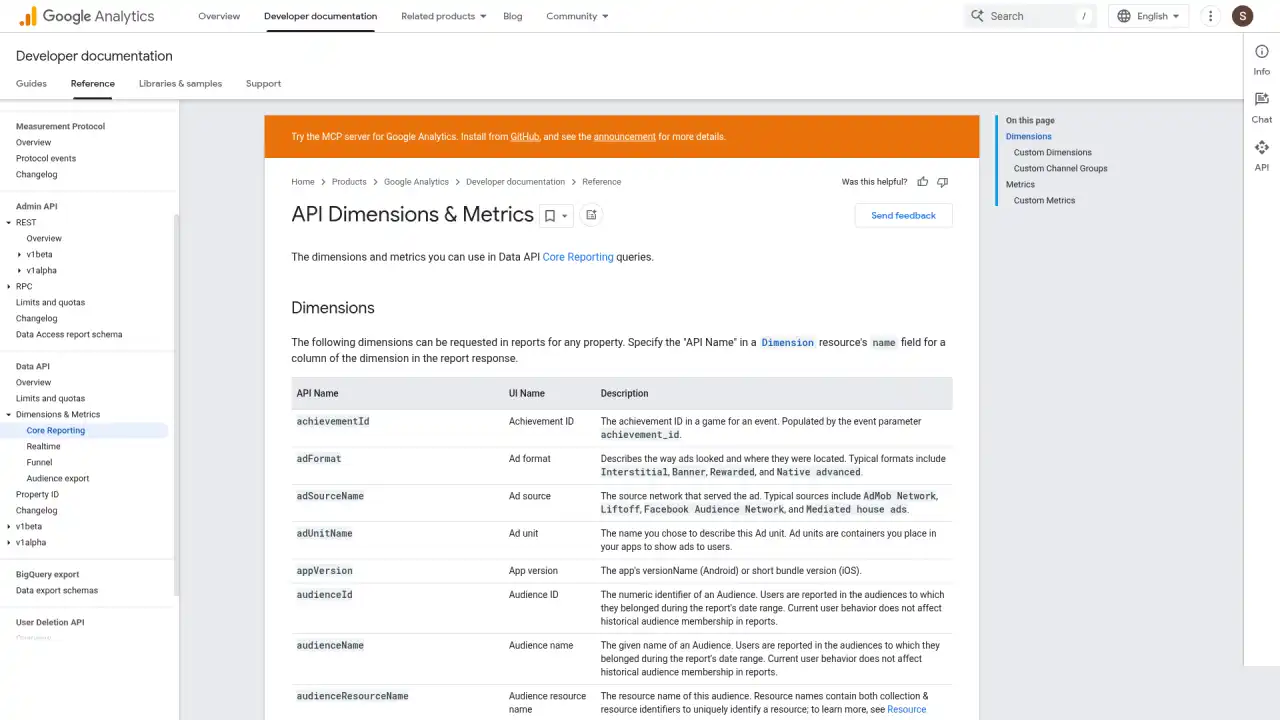
In 2020’s pre-ChatGPT world, I dove deep into Google’s official documentation dense, technical specifications that required understanding not just APIs, but Google’s entire data philosophy. Unlike today’s Swagger documentation, Google Analytics V3 required mastering their unique dimensional model: understanding how dimensions and metrics worked together, configuring precise data retrieval parameters, and navigating complex pagination schemes.
I felt comfortable following this formula:
- Rapid Prototyping: Created simple Python scripts for quick API tests
- Debugging Mastery: Used VS Code’s debugger to trace through call stacks and inspect PyPI libraries’ source code
- Step-by-Step Development: Built a working proof-of-concept before integrating with the team’s complex OOP framework
This debugging workflow allowed me to understand not just what the code did, but how external libraries processed our data internally.
The Success
Within a month, I delivered a fully functional ETL that:
- Automated daily data extraction for multiple clients
- Smoothly handled the transition from Google Analytics V3 to V4
- Included comprehensive PyTest unit tests with fixtures and mocking
- Integrated perfectly with our Docker-containerized infrastructure
The Mistake That Taught Me Everything
Then I made the classic developer error: premature optimization. Without being asked, I began refactoring and “improving” the working system. As the codebase grew, so did my need to perfect it. The results were terrible:
- Development speed dropped dramatically
- Bugs appeared in previously stable code
- I added unnecessary complexity for my teammates
- Communication suffered as I isolated myself trying to write “perfect” code
This experience contributed to my departure from the company—a humbling moment that became my most valuable teacher.
The Transformation
I learned that I was wrong because I focused on code perfection instead of business needs. This failure taught me to:
- Improve Communication: I realized that working alone was my biggest problem; I started prioritizing team collaboration
- Think Practically: I learned to balance code quality with what the business actually needed
🧠 The impact was immediate. In my next technical interview at Next-e, extremely challenging, I solved it perfectly. I was blessed to be part of a startup as a Back-end leader, where I grew exponentially. More importantly, I approached them with new wisdom about when “good enough” truly is good enough.
- Reading documentation is a superpower: The ability to understand complex technical specifications remains invaluable
- Debugging is thinking: Understanding code execution in detail speeds up learning dramatically
- Perfect is the enemy of done: Business value beats architectural beauty every time
- Failure is data: My biggest mistake became my greatest teacher
Today, when mentoring junior developers, I share this story freely. Yes, I was dismissed. Yes, I over-engineered. But that experience shaped the practical, communicative, and business-focused engineer I am today.